
You may be scrolling through this after a night that went sideways in Wilmington, replaying blue lights in your rearview and the moment an officer asked you to blow. You might have refused and watched your license disappear into the officer’s hand, or you agreed to one test and are not sure which one it was. Now you are trying to figure out whether that split-second decision helped you or hurt you.
Drivers in this position often hear completely different advice from friends, co-workers, or the internet about breathalyzer refusal. Some say you should always refuse. Others say you have to blow into every device the officer offers. In North Carolina, and especially in Wilmington and the surrounding counties, the truth is more complicated. The law treats different breath tests in different ways, and one “no” can trigger serious license consequences before you ever see a courtroom.
At Whitley Coleman Law, we deal with that reality every day. We defend DWI and refusal cases across New Hanover, Brunswick, and Pender Counties, and our team includes a former prosecutor who knows how officers and the State approach breathalyzer refusals. In this guide, we walk through how refusal really works in Wilmington, what happens to your license, and how we evaluate your options so you can move from panic to a concrete plan.
What Breathalyzer Refusal Means in Wilmington, NC
Most people use the word “breathalyzer” to describe any device you blow into after a DWI stop. Under North Carolina law, that word usually matters most for the official evidentiary breath test, the large machine at the jail or station that prints out a blood alcohol concentration (BAC) number for use in court. Refusing this test is very different from declining a small handheld device on the roadside, and that difference controls what happens next to your license and your case.
North Carolina is an implied consent state. That means when you drive on public roads, you agree in advance that if you are lawfully arrested for DWI, you will submit to a chemical test of your breath, blood, or sometimes urine when an officer follows the required procedures. In practice, this means that once you are under arrest and the officer reads your implied consent rights, saying “no” to the evidentiary breath test is treated as a refusal with automatic consequences through the Division of Motor Vehicles.
Refusal is not a criminal conviction by itself, but it is not a harmless choice either. A refusal can trigger an automatic civil revocation of your North Carolina driver’s license, separate from any punishment for a DWI conviction. It also creates a piece of evidence that prosecutors in Wilmington may try to use at trial to argue that you refused because you believed the result would be bad. Understanding exactly which test you refused, and when, is the first step in figuring out what the State and DMV are likely to do next.
Our firm spends a lot of time unpacking those details. We review the paperwork officers use in New Hanover, Brunswick, and Pender Counties, including the implied consent form, to confirm whether the refusal the State is relying on was a refusal to the official evidentiary test and whether the procedures were followed correctly. Those specifics often shape the options available to you, both in court and with DMV.
Roadside Breath Tests & Station Tests: What You Can Refuse
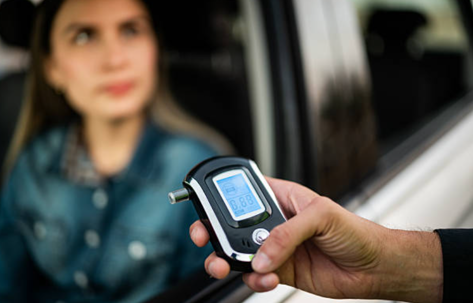
Many drivers in Wilmington never realize that they may have been offered two different breath tests in one night. The first often appears out on the roadside as a small handheld device. Officers typically use this portable breath test, sometimes called a PBT, to help decide whether to arrest you. The second is the larger evidentiary machine at the station or jail, which is the test that feeds directly into your court case and implied consent consequences.
On the roadside, an officer might ask you to perform field sobriety tests, such as walking and turning or standing on one leg, and then offer the PBT. That handheld test is mainly a screening tool. It helps the officer confirm whether alcohol is present and may support the decision to place you under arrest. Refusing the PBT does not trigger the same automatic civil license revocation that follows refusal of the evidentiary breath test, although the officer can still use other observations and testing to decide whether to arrest you.
Once you are arrested and taken to the station or other testing location, things change. There, the officer will typically read your implied consent rights from a form and ask you to submit to the evidentiary breath test, often on a machine such as the Intoximeter EC/IR II. At this point, your decision carries much more weight. If you refuse this evidentiary test after your rights are read, that is the refusal that can trigger implied consent penalties, including an automatic civil revocation of your license.
From our perspective as defense attorneys, the details of how this sequence plays out matter a great deal. With nearly ten years as a former prosecutor and service on the Police Advisory Commission, John Coleman has seen from the State’s side how officers are trained to use the PBT and evidentiary testing in DWI investigations. We look closely at when each test was offered, what was said, and whether your rights were explained clearly, because mistakes in that process can affect both the validity of an alleged refusal and the strength of the State’s evidence.
Legal Consequences of Refusing a Breathalyzer in Wilmington
When a driver in Wilmington refuses the evidentiary breath test after a lawful DWI arrest and implied consent advisement, the first impact is usually on their driver’s license. North Carolina typically issues a civil revocation of your driving privilege for refusing, and this revocation can last for a significant period. That revocation is handled by DMV as a civil matter, not as part of your criminal sentencing, and it often starts before your DWI case is even heard in court.
At the same time, an officer does not need a breath test result to charge you with DWI. Prosecutors in New Hanover County and neighboring counties regularly proceed with DWI cases based on other evidence, such as your driving behavior, your performance on field sobriety tests, your statements, and any video recordings. In other words, refusing the breathalyzer does not prevent a DWI charge and does not guarantee that the State’s case will be weak.
In court, refusal can also become a piece of evidence. Prosecutors often argue that a driver refused the test because they believed the result would be bad, suggesting what is sometimes called a consciousness of guilt. Judges and juries are allowed to hear about a refusal and consider it along with all the other evidence. Your attorney’s job is to put that refusal into context, such as confusion about your rights, fear of the machine, or concern about medical conditions, and to highlight any procedural problems with how the officer handled the testing request.
Our team at Whitley Coleman Law has handled many serious criminal cases where the State relied heavily on refusal evidence or on a limited record of what occurred during testing. We understand how local prosecutors build those arguments and what kinds of weaknesses they sometimes overlook. By carefully reviewing your paperwork, the implied consent form, and available video, we work to separate what the law actually requires from how the State is portraying your refusal.
Is It Better to Refuse or Take the Breath Test?
Drivers often ask whether they should refuse or submit to the breath test, as if there is a single right answer for everyone. In reality, the better choice in any given moment depends heavily on facts that are impossible to sort out in a roadside parking lot. How much and when you drank, whether you have prior DWI convictions or other aggravating factors, and exactly what the officer has already observed all change the balance between risk and potential benefit.
Consider a driver who knows they have consumed a large amount of alcohol in a short time. If they submit to an evidentiary breath test, they may produce an extremely high BAC result that could increase the severity of sentencing if convicted and strengthen the State’s case. Refusing might avoid a precise BAC number but would likely trigger a lengthy civil license revocation and allow the prosecutor to argue that the refusal shows awareness of serious impairment. That driver would later have to deal with both the DWI charge and the refusal consequences.
Now compare that to a driver who believes they are near the legal limit after a drink or two with dinner. A test result close to .08 could give the defense room to challenge the machine’s accuracy, timing of the test, or connection between the BAC at the time of testing and the time of driving. Refusing in that situation might remove a number that could have been contested and still cause the same automatic license revocation for refusal. These scenarios show why blanket advice like “always refuse” or “always blow” usually does not serve drivers well.
There is also the question of your history. A person with prior DWI convictions, license suspensions, or other aggravating facts faces different risks than someone with a completely clean record. In higher-risk cases, the combined effect of a high BAC result and a prior record can drive sentencing into more serious territory. In each situation, we look at the whole picture, not just one BAC number or the absence of a test. Our dual-attorney approach on serious DWI cases allows us to dissect these tradeoffs in detail with clients, so future decisions are made with a clear understanding of the stakes rather than guesswork.
How Breathalyzer Refusal Affects Your North Carolina Driver’s License
For many people in Wilmington, the most immediate and painful consequence of refusing a breathalyzer is losing the ability to drive. During the arrest, the officer typically takes your physical license and serves you with paperwork that acts as notice of a civil revocation. You may receive a temporary driving certificate that is valid for a short period, after which the revocation begins. This process is separate from anything the judge will do later in your criminal DWI case.
The civil revocation for refusal generally lasts longer than the revocation that follows a test-based DWI, and it applies even if your criminal DWI case has not been resolved. Over time, this can affect your job, your family responsibilities, and your ability to handle daily life in and around Wilmington. If you later receive a DWI conviction related to the same incident, that conviction can carry its own suspension or revocation on top of the refusal-related revocation, which complicates the path back to full driving privileges.
In some situations, North Carolina law allows for limited driving privileges that let you drive for essential purposes, such as work, school, or medical appointments, after a certain part of the revocation period has passed. Whether and when you might qualify for a limited privilege after a refusal-related revocation depends on several factors, including your prior record, the specific revocation period, and the court’s evaluation of your situation. Courts in New Hanover, Brunswick, and Pender Counties assess these requests through the lens of local practice and their own experience.
We regularly work with clients from Wilmington and surrounding areas who need to maintain some ability to drive during and after a DWI case. Because we appear before the same local judges and deal with the same DMV frameworks, we understand what kinds of documentation and planning tend to be persuasive when seeking limited driving privileges. That local familiarity can make a significant difference when your goal is not only to defend the DWI charge, but also to put your life back on stable footing as quickly as possible.
Challenging a Refusal & Civil License Revocation
Many drivers assume that once an officer marks “refusal” on the paperwork, nothing can be done about the resulting revocation. In reality, there are cases where the circumstances surrounding the refusal or the officer’s procedures give us grounds to challenge the revocation or the way the State is using the refusal. The key is identifying those issues early, because DMV and court deadlines in refusal cases can be strict.
One area we examine closely is how your implied consent rights were explained. If the officer rushed through the advisement, did not give you adequate time to consider your options, or failed to address clear language or communication barriers, it may raise questions about whether your decision was a true refusal under the law. Medical issues, anxiety, breathing problems, or confusion can also play a role in what the officer labels as a refusal. Sometimes the problem is not that you refused on purpose, but that you could not complete the test as instructed.
There are also technical and procedural issues with the testing setup itself. Problems with the machine, interruptions during the testing sequence, or inconsistencies in how the officer described the events in different documents can create openings to question whether DMV should treat the event as a valid refusal. These arguments often play out in DMV hearings that are separate from your criminal court dates, and they require a detailed understanding of how implied consent law is applied in North Carolina.
At Whitley Coleman Law, we take a hands-on approach to these issues by reviewing the implied consent form, arrest report, and any available dash or body camera footage as soon as possible. This early review helps us identify whether there is a realistic basis to challenge the civil revocation or to limit how damaging the refusal will be in your DWI case. Because the deadlines for these challenges are strict, waiting too long can close off options that might have been available shortly after the arrest.
How We Defend DWI Cases Involving Breathalyzer Refusal
Defending a DWI case with a breathalyzer refusal is different from defending a case with a clear BAC printout, but it is not necessarily weaker or stronger across the board. Our first step is to reconstruct exactly what happened, from the moment the officer noticed your vehicle to the moment they wrote “refusal” on a form or report. We look at why you were stopped, how the officer conducted field sobriety tests, whether a roadside PBT was offered, and how the evidentiary breath test process unfolded.
We then dig into the paper trail and video evidence. That can include the implied consent rights form, the civil revocation notice, any logs or records related to the breath testing machine, and dash or body camera recordings. We evaluate whether the officer had a solid basis to arrest you, whether your rights were read in the way North Carolina law expects, and whether the State’s version of events matches what is visible and audible on video. Weaknesses in that record can support motions in court, negotiation leverage, or challenges at DMV hearings.
John Coleman’s nearly ten years as a former prosecutor, and his service on the Police Advisory Commission, give our firm insight into how the State tends to present refusal cases in New Hanover, Brunswick, and Pender Counties. We anticipate how prosecutors will emphasize the refusal and what arguments they are likely to make about your behavior during the stop. That prosecutor’s-eye view helps us prepare you for what to expect and develop a strategy to counter those points, whether through cross-examination, alternative explanations for the refusal, or focus on other weaknesses in the case.
On serious DWI matters, both Jessica and John Coleman typically collaborate. One of us may focus on attacking the stop, investigation, and testing process, while the other handles the license and DMV strategy, along with broader sentencing and collateral impact concerns. This dual-attorney model helps ensure that your criminal defense and your driving privileges are not handled in isolation. Our goal is to explore every realistic avenue for limiting the impact of the refusal on your future.
What To Do Next If You Refused a Breathalyzer in Wilmington
If you refused a breathalyzer in Wilmington or the surrounding counties, your next steps can influence both your driving privilege and the outcome of your DWI case. Start by keeping every piece of paperwork you received at the time of arrest, including any civil revocation notice and temporary driving certificate. Write down your memory of the stop and testing process soon while details are fresh, including what the officer said when asking you to blow and how you responded.
You should also be cautious about driving if your license has been revoked. Driving while revoked can create a new criminal charge and make an already difficult situation worse. There may be windows to challenge certain revocations or request hearings, and those windows can close quickly. The sooner an attorney reviews your documents and timeline, the better the chance of preserving options for your license and your defense.
Every DWI stop and refusal is different, and applying general rules without legal guidance can backfire. At Whitley Coleman Law, we offer a free initial consultation to review your specific situation, explain what your refusal means under North Carolina law, and map out your options for both court and DMV. We regularly defend drivers in Wilmington and throughout New Hanover, Brunswick, and Pender Counties, and we are ready to sit down with you and plan a path forward.